Light In The Cavern


Information
Disclaimer:
If you or a loved one think you struggle with any of these disorders get the help you need and contact a doctor!
Depression
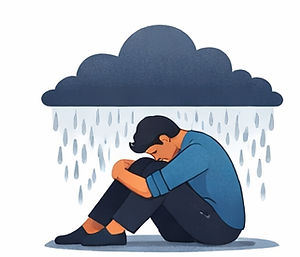
The medical term for depression is Major Depressive Disorder (MDD), or is often referred to as clinical depression. Not everyone has the same symptoms and everyone handles depression differently.

Attention Deficit Hyperactive Disorder
Attention Deficit Hyperactive Disorder (ADHD) is characterized as the inability to focus, and stay on task. People who have ADHD are constantly moving, fidgeting, and have impulsive behaviors.
Insomnia Disorder
Insomnia is a sleep disorder that makes it hard to sleep or to fall asleep. Many adults experience at least short-term insomnia. Short-term insomnia can be caused by stress or a stressful event such as work or a personal matter. There is another type of insomnia which is long term, called chronic insomnia. Chronic Insomnia lasts for three months or more.


Narcissistic Personality Disorder
Narcissistic personality disorder where the person sense of importance is inflated. Narcissists struggle with criticism. Narcissists believe they are the most important and often expect special favor. This disorder is more common in males than females.
Anxiety
Anxiety is characterized as a persistent worry or fear. There are a multitude of anxieties, all stemming from different fears. Social anxiety disorder is when a social situation causes extreme anxiety. Another type of anxiety is Separation Anxiety Disorder. It's when a child is afraid of being separated from a parental figure.


POst Traumatic STress Disorder
Post Traumatic Stress Disorder is known as PTSD. 1 in 3 people who experience extreme trauma develop PTSD. It is unknown what causes PTSD to develop.
Eating Disorders
The three most common Eating Disorders (ED) are Binge-eating, Bulimia nervosa, and anorexia nervosa. Binge eating is described as eating large amounts of food in a short period of time, eating even when full, eating alone in secret to avoid embarrassment. Bulimia nervosa is making oneself throw up or taking laxatives to try to speed up the movement of food throughout the body. Anorexia nervosa is limiting food, starving oneself, with a strong fear of gaining weight, and seeing oneself as bigger than reality.


Obsessive Compulsive Disorder
Obsessive Compulsive Disorder (OCD) is when there are ideas or thoughts that are unwelcome. To relieve this feeling people repetitively perform an action until they're satisfied.
Bipolar Disorder
Bipolar disorder was formerly known as manic depression. There are episodes of mania, then there are lows afterward, which is the depression. The swings can happen a few times a year or even consistently. In between swings there is emotional stability.